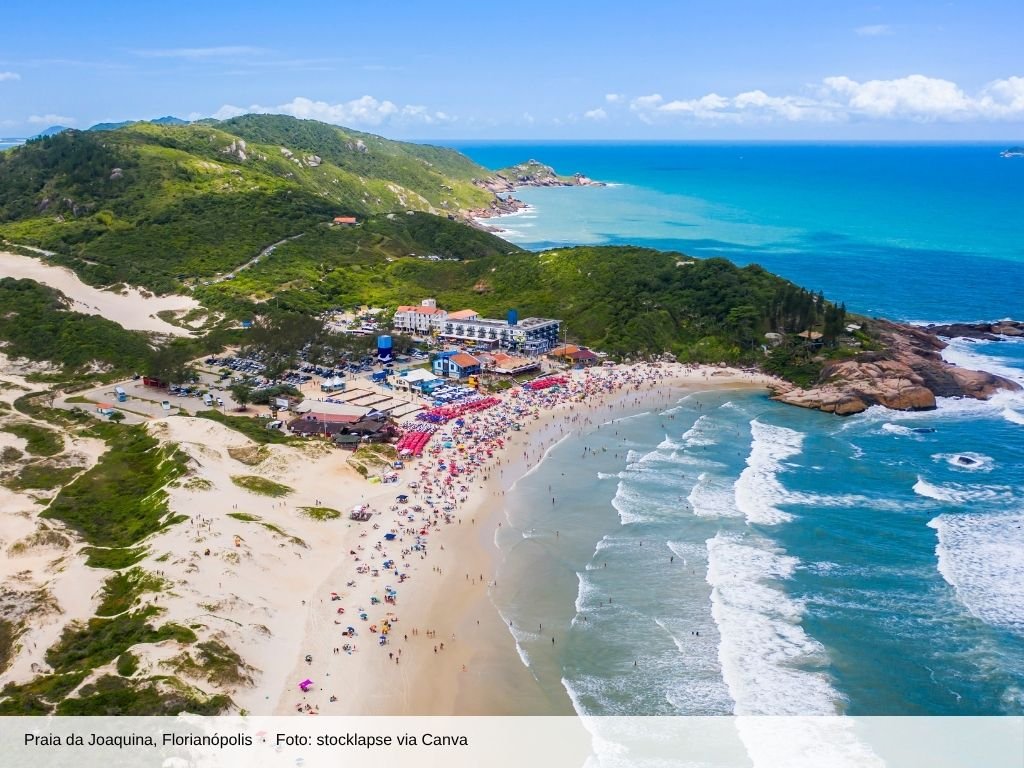
A Joaquina Beach It is located on the eastern side of Santa Catarina Island and is the most famous surfing spot in Florianópolis. It features about 3 km of sandy beach, strong waves, a rocky shoreline on the left side, and, just behind it, the dunes where sandboarding first began in the city.
Leaving downtown, you can get there by bus in two stages: from TICEN to TILAG, at Lagoa da Conceição, and from there on the 363 Joaquina line. By car or ride-hailing app, the route goes past the lagoon and takes about 25 minutes without traffic. Below is everything you need to know before you go.
Why Joaquina Is the Surfing Beach in Floripa
Joaquina began attracting surfers in the 1970s, when Brazilians and foreigners started seeking out its waves. The current name first appeared on maps in 1975, and a municipal law passed that year recognized a local landowner as the person after whom the beach was named. Before that, the stretch of beach was called Praia do Campeche. Several legends surround the name; the most widely told is that of a lacemaker who was supposedly swept out to sea.
1. The Hang Loose Pro Contest
The major milestone was the Hang Loose Pro Contest, which debuted at Joaquina in 1986 and brought Brazil back to the professional world surfing circuit. The first edition brought together world champions such as Mark Richards, Tom Carroll, Shaun Tomson, and Wayne Bartholomew, with Australian Dave Macaulay taking the victory on waves of about 3 meters. The event drew crowds of young people from all over the country to the beach and is remembered as the starting point for generations of Brazilian surfers.
2. The Waves Today
The beach continues to welcome surfers of all skill levels. The ocean is usually rough with strong currents, so non-surfers should only enter the water near the lifeguard stations and follow the warning flags.
Dunes and sandboarding
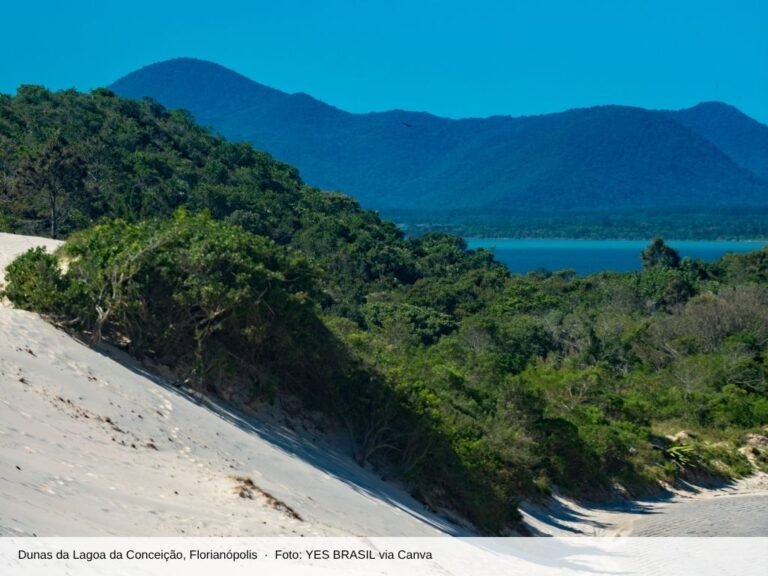
The Joaquina Dunes They are part of the Lagoa da Conceição Dunes Municipal Natural Park, an area protected by the city government. Access to the dunes is free. Sandboarding began there in the 1980s, when local surfers would slide down the sand on broken surfboards on days when there were no waves.
Today, they offer board rentals and lessons. In a January 2026 article, rentals ranged from to R$ 35 R$ 50 per hour and lessons from to R$ 130 R$ 150 per person. Prices vary, so be sure to check with the venue. For an itinerary focused solely on the dunes, check out the post about the Lagoa da Conceição Dunes here on the blog.
Beach Facilities
Joaquina has restrooms, showers, lifeguards, police patrols, nighttime lighting, kiosks, restaurants, and surf shops. On the left-hand side, the rocky shoreline offers a short walk with a view of the ocean and bears traces of indigenous stone-working workshops, marks left by peoples who lived there before colonization.
Prices vary widely between street stalls and beachfront restaurants. It's a good idea to check the menu before sitting down.
How to get to Joaquina from downtown
1. By bus via TICEN and TILAG
On foot, the hotel is close to the Downtown Transit Hub (TICEN). From there, take the line 330 TILAG/TICEN via Mauro Ramos (Box 10 in TICEN) or the 320 TILAG/TICEN via Beira Mar to the Lagoa Terminal (TILAG). At TILAG, board the 363 Joaquina, which starts at Box 6, runs along Avenida das Rendeiras, and ends at the beach.
Route 363 has few departures per day, with intervals ranging from 50 minutes to over an hour, so check the schedule on the Consórcio Fênix website before you leave. The fare in September 2026 is R$ 7,70 in cash, via PIX, or QR code, and R$ 7,20 with a tourist card, with integration at the terminal. Expect the trip to take about an hour in total.
2. By car or ride-hailing app
From downtown, head toward SC-404, pass through Itacorubi, go up the hill to Lagoa, go through the small town center of Lagoa da Conceição, and take Avenida das Rendeiras to Joaquina. Without traffic, it takes about 25 minutes. On sunny summer days, traffic on the climb up to Lagoa tends to come to a standstill, so leave early.
3. Parking
There are parking lots right by the beach; they’re usually paid parking and charged by the day. On hot weekends, they fill up by late morning. If you’re driving, arrive before 9 a.m. or use the app so you don’t waste time looking for a spot.
Practical Tips
- Bring sunscreen, a hat, and sunglasses: the sand in the dunes reflects a lot of sunlight.
- Sneakers or sturdy sandals will help you climb the dunes; the sand gets hot quickly after 10 a.m.
- Only go into the water near lifeguard stations, and obey the red flags.
- For sandboarding, choose early morning or late afternoon, when it's cooler and the wind is lighter.
- Check the return schedule for Route 363 before leaving the beach; departures are infrequent.
- Don't step on the sand dune vegetation, it keeps the dunes in place.
Frequently Asked Questions
How long does it take to get from the city center to Joaquina?
By car or ride-hailing app, it takes about 25 minutes without traffic. By bus, with a transfer at TILAG, allow about an hour.
Do you have to pay to use the dunes?
No. Access to the dunes is free. You only pay if you rent a board or take a sandboarding lesson.
Is Joaquina good for kids?
The ocean can get rough, so children should stay at the water's edge and always stay close to the lifeguards. The dunes are a lot of fun, as long as an adult is supervising.
Stay downtown and visit Joaquina hassle-free
It's located Hotel Farol da Ilha on Bento Gonçalves Street, in Downtown, just a few minutes' walk from the bus terminal and 400 m from the Rita Maria Bus Station. You can spend the day at Joaquina and come back in the evening for dinner near the Public Market. Check out the accommodations at the Hotel Farol da Ilha and set up your base to explore the island.
Cover photo: stocklapse via Canva.