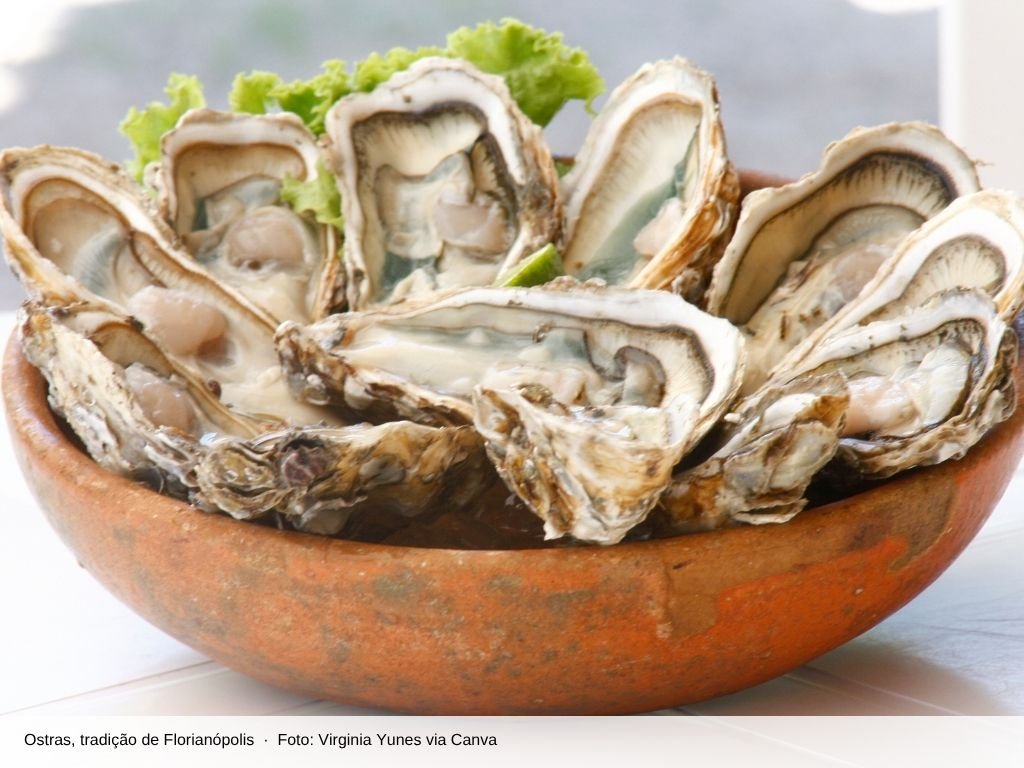
The oysters from Florianópolis They come from marine farms located in the bays surrounding the island, mainly in Ribeirão da Ilha, in the south, and in the Santo Antônio de Lisboa and Sambaqui region, in the north. The city is the largest producer of oysters in Santa Catarina, and the state accounts for more than 97% of the shellfish farmed in Brazil.
On the menu, the three classic dishes are raw oysters, steamed oysters, and oysters au gratin. To eat near the source, head to Ribeirão or Santo Antônio de Lisboa. Those in the city center can also find oysters at the Public Market, 450 m from Hotel Farol da Ilha.
Where do the oysters from Floripa come from?
Almost every oyster served in the city is a Pacific oyster (Crassostrea gigas), which accounted for 98.9% of Santa Catarina’s production in 2024, according to Epagri. There is also the native oyster, which is farmed on a much smaller scale.
1. A history spanning just over 35 years
The Pacific oyster arrived in Santa Catarina in 1987, brought there by UFSC to test its cultivation along the coast. Commercial cultivation began in late 1989, through a partnership between UFSC and Acarpesc (now Epagri) with small-scale fishermen from Santo Antônio de Lisboa. In 1991, a laboratory opened in Sambaqui began producing oyster seeds. Today, UFSC’s Marine Mollusk Laboratory operates in Barra da Lagoa and supplies producers.
2. How Oysters Are Farmed
The seeds leave the laboratory and grow in the sea, in structures resembling lanterns suspended from cables. In the warmer waters of southern Brazil, oysters reach market size in about six months of cultivation, according to the Epagri manual. Production areas have been subject to health monitoring for bacteria and algae since 2007.
3. Santa Catarina Leads the Nation in Production
In 2024, Santa Catarina produced 2,462 metric tons of oysters, a 42.2% increase over the previous year, with 101 producers engaged in the activity. Florianópolis leads the way, followed by São José and Palhoça. Combining oysters and mussels, the state accounted for 97.23% of the nation’s farmed mollusk production. The data comes from Epagri’s 2025 Annual Agriculture Summary.
The year 2026 was difficult for oyster farmers. With sea temperatures reaching 34°C in January and February, there was a high oyster mortality rate, with losses of up to 90% at some farms, according to a report in Gazeta do Povo. As a result, availability may vary from one restaurant to another.
How to Order Oysters in Florianópolis
In kind
Raw, served on ice with a few drops of lemon juice. This is the way to best appreciate the taste of the sea, and it’s the most popular choice among oyster lovers. Some restaurants offer vinaigrettes on the side.
Out of breath
Steam them in a pot with a little water until the shell opens. They have a milder flavor and a firmer texture. A good introduction for anyone who has never eaten raw oysters.
Au Gratin
Baked open-faced and topped with creamy sauce and cheese, it's baked in the oven until golden brown. It's the most popular dish among those who prefer something heartier.
Many restaurants sell them by the dozen or half-dozen, and some offer all-you-can-eat buffets or tasting menus with a variety of preparations. If you're not sure, order half a dozen of each type to share.
Where to Eat Oysters Near Downtown
We've already discussed these neighborhoods in our guide to Ribeirão da Ilha and Santo Antônio de Lisboa, in the blog. Here are some addresses the oyster remembers.
Ribeirão da Ilha
According to Epagri, the neighborhood was already home to most of the city’s production in 2014. Among the restaurants mentioned in news reports about oysters are the Ostradamus, the Port of the Contract and the Azorean Folk Dance Troupe, with a variety of dishes on the menu. It's the longest route from downtown: set aside the whole day.
Santo Antônio de Lisboa and Sambaqui
Closer to downtown, on the northern part of the island. The Freguesia Oyster Bar It has its own marine farm and offers more than ten different ways to prepare the dish. The Sintra Seafood Restaurant and the Red They're also among the most memorable. Combine lunch with a late afternoon on the waterfront.
In the City Center
With no time to cross the island, the Public Market comes to the rescue: the stalls serve seafood, including oysters. We have a guide to the market, stall by stall, at the blog.
Practical Tips
- From downtown, you can take a bus via TICEN to the north or south of the island. Check the route on the app before you leave, because the trip to Ribeirão is long.
- Whether you're driving or using a ride-sharing app, avoid heading out in the late afternoon on weekdays, when traffic heading south on the island is heavy.
- On weekends, the seaside restaurants are packed at lunchtime. Make a reservation or arrive early.
- Ask where the oysters come from: many restaurants work with local producers.
- Raw oysters should arrive closed or freshly shucked, on ice, with the scent of the sea.
- If you're going to Fenaostra, October 6, 12 at CentroSul, Wednesday is Oyster Night.
Frequently Asked Questions
Where's the best place to eat oysters in Florianópolis?
The neighborhoods where produce is grown: Ribeirão da Ilha, in the south, and Santo Antônio de Lisboa and Sambaqui, in the north. For those in the city center who are short on time, the Public Market is the closest option.
Is Florianópolis Brazil's largest oyster producer?
Yes. Florianópolis is the municipality that produces the most oysters in Santa Catarina, and the state accounts for more than 97% of the mollusks farmed in the country, according to Epagri.
What's the difference between steamed oysters and oysters au gratin?
The steamed version is simply steamed. The gratin version is first steamed and then baked in the oven with sauce and cheese.
Stay downtown and go oyster hunting
The Center is a good starting point for exploring both sides of the island: TICEN and the Rita Maria Bus Station are nearby, and the Public Market is 450 m away. The Hotel Farol da Ilha It's located at 163 Bento Gonçalves Street. Check out the accommodations and plan your oyster tour starting here.
Cover photo: Virginia Yunes via Canva.